Buying Guide
Choosing a Batería doméstica: The Complete Buying Guide 2026
The batería doméstica market is growing rapidly. In this buying guide, we help you step by step towards the batería doméstica that suits your home, consumption and budget — independent and honest.
Patrick1 de marzo de 202610 min. de lectura
Back to blog
Iniciar test
Step 1: Determine why you want a batería doméstica
Your reason for purchasing determines which type of battery is the best fit. The three most common reasons:
Maximise savings on your factura energética
You have paneles solares and want to inyectar as little electricity to the grid as possible. Especially relevant now that the compensación neta scheme ends in 2027. You are looking for a battery with enough capacity to store your daily surplus.
Important: Choose at least 5 kWh, preferably 10 kWh. Focus on eficiencia de carga and the number of ciclos.
Independence and alimentación de respaldo
You want to be less dependent on the grid and keep your most important appliances running during a corte de energía. Pay attention to whether the battery has a función UPS or backup function.
Important: Not all batteries offer alimentación de respaldo. Check whether the system has an automatic switchover and how much power (Watt) it can deliver during an outage.
Earn money with tarifas dinámicas
You have a contrato de energía dinámico and want to smartly charge the battery when electricity is cheap and discharge when the price is high. This requires a battery with control inteligente and a connection to your proveedor de energía.
Important: Choose a system that supports IFTTT, Home Assistant or its own smart charging strategy.
Step 2: Calculate the right capacity
The capacity of a batería doméstica is expressed in kilovatios-hora (kWh). Rules of thumb:
| Situación | Capacidad recomendada | Excedente diario estimado |
|---|---|---|
| Small house, 6-8 panels, 2 persons | 5 kWh | 3-5 kWh |
| Average house, 10-14 panels, 3-4 persons | 10 kWh | 6-10 kWh |
| Large house, 16+ panels, bomba de calor or cargador de VE | 15-20 kWh | 10-15 kWh |
| Maximum autosuficiencia, large system | 20-30 kWh | 15+ kWh |
Tip: An oversized battery is not cost-effective — you won't fill it daily. An undersized battery leaves money on the table. The sweet spot for most hogares is 10 kWh.
Step 3: Plug & play or instalación fija?
There are two main types of baterías domésticas:
Plug & play (socket battery)
- Connects to a regular power socket
- No installer required
- Maximum 800W continuous (EU standard) or 2,000W with upgrade
- Ideal for inquilinos or those who want to get started quickly
- Examples: Anker SOLIX Solarbank, Zendure SolarFlow, ZinVolt Base
Instalación fija (fixed installation)
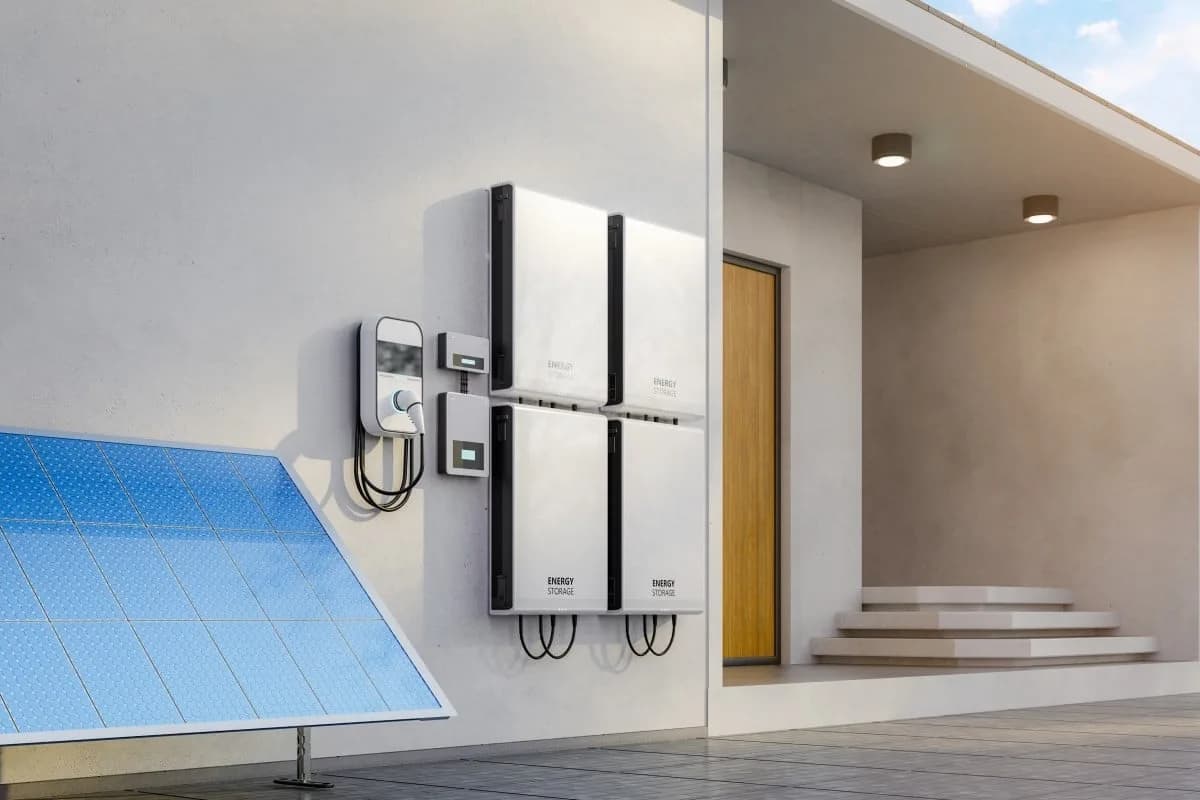
- Connected to your cuadro eléctrico by a instalador certificado
- Higher power output possible (3,000-10,000W)
- Full alimentación de respaldo capability
- Higher capacities available
- Examples: Huawei LUNA 2000, Anker SOLIX X1, EcoFlow DELTA Pro Ultra, SolarEdge Batería doméstica
Comparison
| Característica | Plug & play | Instalación fija |
|---|---|---|
| Costes de instalación | €0 | €300-800 |
| Max. power | 800-2,000W | 3,000-10,000W |
| Alimentación de respaldo | Limited (UPS via socket) | Full (whole house) |
| Capacity | 1-24 kWh | 5-30+ kWh |
| Flexibility | High (portable) | Low (fixed) |
| Price per kWh | €300-500 | €400-700 |
Step 4: What should you look for when comparing?
Capacity (kWh)
¿Qué batería doméstica te conviene?
Haz el test gratuito y descúbrelo en 2 minutos.
How much energy the battery can store. Note: the capacidad utilizable is sometimes lower than the nominal capacity. A 10 kWh battery with 90% DoD (Profundidad de Descarga) effectively delivers 9 kWh.
Power (kW)
How fast the battery can carga y descarga. A battery with 3.5 kW power can deliver a maximum of 3,500 Watt at once. Important if you have a bomba de calor or induction hob.
Ciclos and vida útil
A cycle is one complete carga y descarga. Most baterías domésticas offer 6,000-10,000 ciclos. With daily use, that is 16-27 years. Choose a minimum of 6,000 ciclos.
Tecnología de batería
- LFP (Lithium Iron Phosphate): Safer, longer vida útil (6,000+ ciclos), slightly lower densidad energética. The standard for baterías domésticas in 2026.
- NMC (Nickel Manganese Cobalt): Higher densidad energética, but shorter vida útil and higher riesgo de incendio. Less commonly used for home storage.
Advice: Always choose LFP for home storage. All major brands have switched to LFP technology.
Garantía
Look at both the duration (years) and the capacity garantía (e.g. 70% remaining capacity after 10 years). Market standard:
- Anker SOLIX: 10 years
- EcoFlow: 5 years (extendable)
- Huawei: 10 years
- Zendure: 10 years
Smart features
- Connection with contador inteligente (P1 port)
- App control
- Tarifa dinámica optimisation
- Home Assistant / IFTTT integration
- Charge/discharge schedules
Step 5: The best baterías domésticas of 2026
Budget choice: Anker SOLIX Solarbank 2 Pro
- Plug & play, 1.6-9.6 kWh
- From €999
- Strong app, P1 dongle
- Ideal as an entry point
Best value for money: Anker SOLIX X1
- Instalación fija, 5-180 kWh (modular)
- From €3,999
- trifásico, alimentación de respaldo, 6,000 ciclos
- Excellent for average to large hogares
Best for tarifas dinámicas: Zendure SolarFlow
- Plug & play, ampliable
- Control inteligente for tarifas dinámicas
- Good app integration
Best alimentación de respaldo: EcoFlow DELTA Pro Ultra
- Instalación fija, up to 90 kWh
- Full home backup
- 7,200W power output
Best for large systems: Huawei LUNA 2000
- Instalación fija, 5-30 kWh
- Proven technology, high reliability
- Excellent integration with Huawei inversors
Compare independently at HES
At Home Energy Solutions, we are not a representative of a single brand. We sell Anker SOLIX, EcoFlow, Zendure, Huawei and many other brands. Nuestro consejo is based on what suits your situation — not on which brand gives us the highest margin.
Ver nuestra complete range or get in touch for personal advice.
Preguntas frecuentes
What is the best batería doméstica of 2026?
There is no universally "best" batería doméstica. The best choice depends on your situation. For most hogares with paneles solares and average consumption, a 10 kWh LFP battery with control inteligente offers the best balance between price and performance.
How much does a batería doméstica cost in 2026?
Prices range from €999 for a compact plug & play unit to €8,000-12,000 for a large instalación fija system. On average, you pay €300-500 per kWh of capacidad de almacenamiento. Prices have dropped 15-20% in 2025-2026 compared to 2024.
Do I need an installer?
Not for plug & play systems — you connect them yourself to a power socket. For instalación fija systems, you need a instalador certificado who connects the battery to your cuadro eléctrico. Budget €300-800 for costes de instalación.
Can I expand later?
Most modern baterías domésticas are modular and ampliable. Do check in advance whether the brand offers ampliación modules and what the maximum system capacity is. Anker SOLIX X1 is ampliable to 180 kWh, ZinVolt Base to 24 kWh.
Can I reclaim IVA on a batería doméstica?
Yes, if you connect the batería doméstica to a panel solar system, you can reclaim the 21% IVA from the tax authority as a private individual. This applies to both plug & play and instalación fija systems.
P
Patrick
Founder & certified energy advisor
Choosing the right batería doméstica?
Compare all brands and models or calculate your savings directly with our calculator.
Related Articles
Continue reading about home energy
¿Listo para pedir?
Explora nuestra gama completa de baterías domésticas con la mejor relación calidad-precio.