Comparison
Top 10 Home Batteries 2026: The Ultimate Comparison
The 10 best home batteries of 2026 honestly compared. Tesla Powerwall 3, Anker SOLIX X1, Huawei LUNA 2000, BYD and more. Specs, prices, warranties and pros & cons.
Patrick1 March 202618 min. read
Back to blog
Start quiz
The home battery market has matured in 2026. Where three years ago you could choose from a handful of options, dozens of manufacturers are now competing for the European consumer's attention. But which home battery is truly the best? And for whom? In this comprehensive comparison, we put the ten most relevant home batteries side by side. With honest specs, current prices, warranty terms and a clear verdict for each system.
Independent comparison
Important to know: Home Energy Solutions is an independent multi-brand retailer. We sell the majority of the brands in this comparison. Our goal is not to push a specific product, but to help you make the right choice for your situation.
The complete comparison table
Before we discuss each system individually, here is the full overview. This table contains the key specifications of each system in its most common configuration.
| # | System | Type | Capacity | Max. power | Cycles | Warranty | Guide price | Price/kWh |
|---|---|---|---|---|---|---|---|---|
| 1 | Tesla Powerwall 3 | Hardwired | 13.5 kWh | 11.5 kW | 4,000+ | 10 years | EUR 9,500 | EUR 704 |
| 2 | BYD Battery-Box HVS/HVM | Hardwired | 5.1-22.1 kWh | 5.1 kW | 6,000 | 10 years | EUR 4,200 (10.2 kWh) | EUR 412 |
| 3 | Anker SOLIX X1 | Hardwired | 5-180 kWh | 6.0 kW | 6,000 | 10 years | EUR 4,500 (9.6 kWh) | EUR 469 |
| 4 | EcoFlow DELTA Pro Ultra | Hardwired | 6-90 kWh | 7.2 kW | 4,000 | 5 years | EUR 6,500 (10 kWh) | EUR 650 |
| 5 | Huawei LUNA 2000 | Hardwired | 5-30 kWh | 5.0 kW | 6,000 | 10 years | EUR 5,000 (10 kWh) | EUR 500 |
| 6 | Pylontech Force H2 | Hardwired | 3.5-21.0 kWh | 3.5 kW | 6,000 | 10 years | EUR 3,500 (10.5 kWh) | EUR 333 |
| 7 | GoodWe Lynx Home U | Hardwired | 6.6-26.2 kWh | 5.0 kW | 6,000 | 10 years | EUR 3,800 (9.8 kWh) | EUR 388 |
| 8 | Fox ESS ECS2900 | Hardwired | 2.9-17.4 kWh | 2.9 kW | 6,000 | 10 years | EUR 2,400 (8.6 kWh) | EUR 279 |
| 9 | Anker SOLIX Solarbank 2 Pro | Plug & play | 1.6-9.6 kWh | 0.8-2.4 kW | 6,000 | 10 years | EUR 1,399 (1.6 kWh) | EUR 499 |
| 10 | Zendure SolarFlow Hyper 2000 | Plug & play | 1.0-7.7 kWh | 1.2-2.4 kW | 8,000+ | 10 years | EUR 1,199 (1.0 kWh) | EUR 480 |
Prices are indicative, including VAT, excluding installation. Prices per kWh are calculated based on the listed configuration.
1. Tesla Powerwall 3
Overview
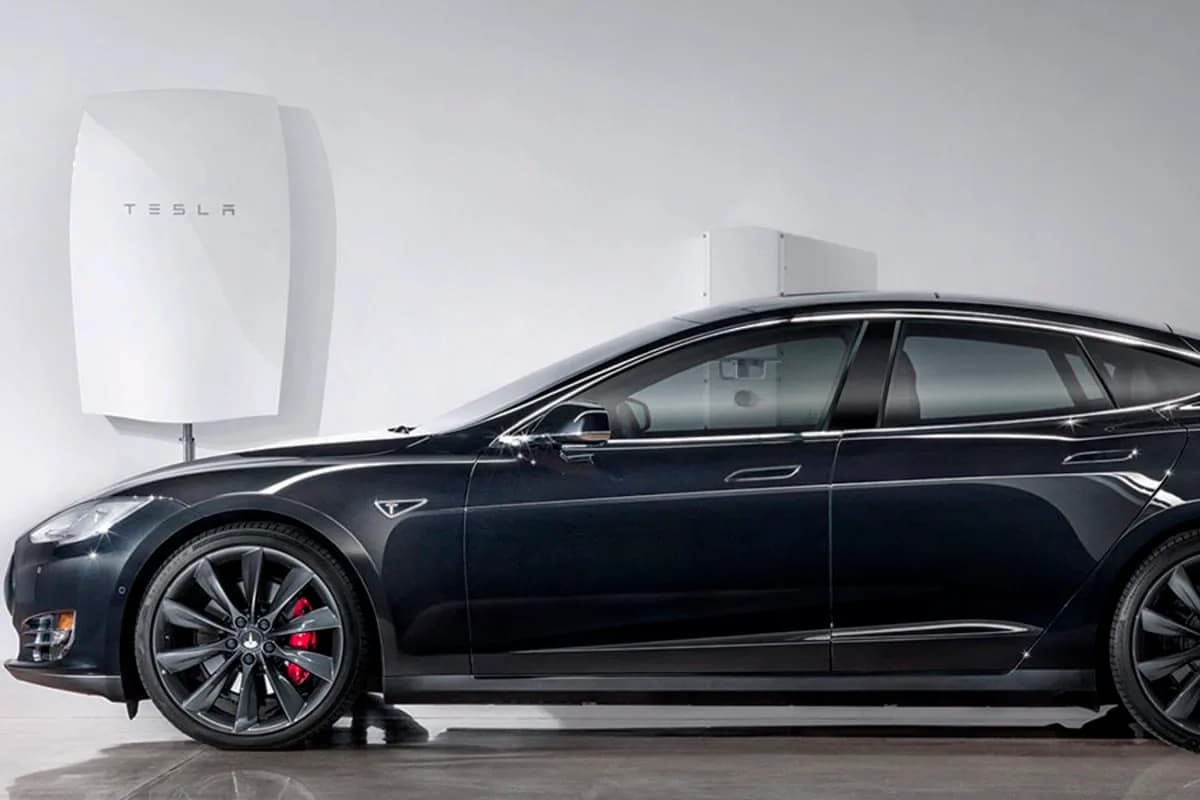
The Tesla Powerwall 3 is the third generation of the world's most well-known home battery brand. The Powerwall 3 integrates its own inverter for the first time, making it a fully-fledged all-in-one system. With 13.5 kWh capacity and an impressive peak power of 11.5 kW, it is one of the most powerful residential systems on the market.
Specifications
- Capacity: 13.5 kWh (usable: 13.5 kWh, 100% DoD)
- Continuous power: 5.8 kW (charge/discharge)
- Peak power: 11.5 kW
- Integrated inverter: 11.5 kW solar input
- Round-trip efficiency: 89-97.5%
- Cycles: More than 4,000
- Dimensions: 1098 x 609 x 193 mm
- Weight: 79 kg
- Protection rating: IP67 (indoor and outdoor)
- Operating temperature: -20 to 50°C
- Warranty: 10 years or unlimited cycles (70% remaining capacity)
Advantages
- Integrated inverter eliminates the need for a separate purchase
- Extremely high peak power (11.5 kW) for backup power
- Compact form factor for 13.5 kWh
- Expandable with up to 4 Powerwalls (54 kWh)
- Tesla app with excellent monitoring and Storm Watch feature
- IP67: fully weatherproof, can be installed anywhere
Disadvantages
- Highest price per kWh in this comparison
- Integrated inverter is wasteful if you already have a good inverter
- Limited availability in Europe (long lead times)
- Service and installation exclusively through Tesla-certified installers
- Not modular: you cannot add half a Powerwall
Verdict: The Powerwall 3 is technically impressive but pricey. Ideal for those installing a completely new system (solar panels + battery) who are willing to pay for the Tesla ecosystem. Less suitable if you already have a good inverter, as you would be paying twice.
2. BYD Battery-Box Premium HVS/HVM
Overview
BYD is a Chinese battery giant that manufactures both electric vehicles and energy storage systems. The Battery-Box Premium series is one of the most installed home batteries in Europe. Its modular design, broad inverter compatibility and competitive price per kWh make it a favourite among installers.
Specifications
- HVS: 5.1-12.8 kWh (in increments of 2.56 kWh)
- HVM: 8.3-22.1 kWh (in increments of 2.76 kWh)
- Continuous power: 5.1 kW
- Round-trip efficiency: More than 95.3%
- Cycles: 6,000 (at 90% DoD)
- Warranty: 10 years (60% remaining capacity)
Advantages
- Excellent price per kWh (one of the most competitive on the market)
- Very broadly compatible: works with SMA, Fronius, SolarEdge, GoodWe, Kostal and more
- Modular: capacity expandable in small increments
- Proven track record: hundreds of thousands of installations across Europe
- Lightweight per module (easier to install)
- IP55: suitable for garages and sheltered outdoor locations
Disadvantages
- Requires an external hybrid inverter (additional cost)
- No integrated backup power function (depends on inverter)
- App experience less advanced than Anker, Tesla or Zendure
- No plug & play variant available
- No built-in dynamic tariff optimisation
- Less consumer-friendly app
Verdict: The BYD Battery-Box is the workhorse choice of Europe. Not the most eye-catching or innovative, but reliable, affordable and broadly compatible. A strong choice if you already have a hybrid inverter or want a system that virtually any installer can fit.
3. Anker SOLIX X1
Overview
The Anker SOLIX X1 is Anker's hardwired home battery, from the well-known consumer electronics brand. The system stands out for its extreme scalability (5 to 180 kWh), smart software and the fact that Anker offers an ecosystem ranging from plug & play to professional solutions. The X1 has rapidly gained ground in Europe thanks to a competitive price-to-performance ratio.
Specifications
- Capacity: 5-180 kWh (modular, in increments of 4.8 kWh per battery pack)
- Continuous power: 6.0 kW (per hub)
- Peak power: 9.0 kW
- Round-trip efficiency: More than 95%
- Cycles: 6,000 (at 90% DoD, more than 80% remaining capacity)
- Dimensions (9.6 kWh): 600 x 300 x 1,000 mm
- Weight (9.6 kWh): Approximately 115 kg
- Protection rating: IP20 (battery), IP65 (hub)
- Operating temperature: 0 to 45°C
- Warranty: 10 years
- Available in single-phase and three-phase versions
Advantages
- Extremely scalable: from 5 to 180 kWh, suitable for any household
- Strong price per kWh in the mid-range segment
- Integrated hybrid inverter (in the hub)
- P1 dongle for smart meter reading and zero-export
- Full backup power function (with backup box)
- Excellent app with real-time monitoring
- Available in single-phase and three-phase versions
Disadvantages
- Battery modules are IP20 (indoor installation only)
- Requires Anker inverter (not combinable with existing inverters via DC)
- Premium price for small configurations (under 10 kWh)
- Relatively new to the market (shorter track record than BYD or Huawei)
Verdict: The Anker SOLIX X1 is one of the best home batteries available today for European households. The combination of scalability, smart software and a reasonable price makes it suitable for both beginners and large systems. At Home Energy Solutions, this is one of the best-selling systems, and that is not without reason.
4. EcoFlow DELTA Pro Ultra
Overview
EcoFlow made its name with portable power stations and translated that expertise into a fully-fledged home battery system. The DELTA Pro Ultra is the flagship: a modular, powerful home battery with the highest peak power in the consumer segment. The system is aimed at households where backup power is the highest priority.
Advantages
- Highest peak power (12 kW) in the residential segment
- Fully modular: inverter + separate battery packs
- Smart Home Panel 2 for advanced circuit integration
- 240V Split Phase and three-phase support
- Strong app with remote monitoring
- Also usable as a portable unit (DELTA Pro 3 compatible as a power station)
Disadvantages
- Highest price per kWh after Tesla
- Only 5 years warranty as standard (10 years costs extra)
- Lower round-trip efficiency (92%) than most competitors
- Fewer cycles (4,000) than comparable systems
- Smart Home Panel 2 makes installation more complex and expensive
- Battery packs are IP20 (indoor only)
Verdict: The EcoFlow DELTA Pro Ultra is the backup power champion. If full home backup during power outages is your highest priority, no other consumer system comes close to its peak power. But you pay a premium for that capability, and in the long run the lower cycle count and shorter warranty make it less cost-effective than competitors.
5. Huawei LUNA 2000
Overview
Huawei is one of the world's largest inverter manufacturers, and the LUNA 2000 battery is specifically designed to work seamlessly with Huawei SUN2000 inverters. The result is an extremely efficient, proven and reliable system that has been part of the European installer network for years.
Advantages
- Highest round-trip efficiency on the market (more than 97%)
- IP65: fully suitable for outdoor installation
- Wide temperature range (-20 to 55°C)
- Seamless integration with Huawei SUN2000 inverter
- Years of proven performance in the European market
- Modular in increments of 5 kWh (up to 30 kWh per string)
- Backup box available for backup power function
Disadvantages
- Optimally only with Huawei inverter (limited compatibility)
- No plug & play variant
- Higher entry price (minimum 5 kWh)
- App and monitoring less consumer-friendly than Anker or Tesla
- No dynamic tariff optimisation in the Huawei app itself
- 5 kWh increments are coarse (not everyone needs exactly 5, 10 or 15 kWh)
Verdict: The Huawei LUNA 2000 is the reference standard for installers. If you are purchasing a new complete system (inverter + battery) or already have a Huawei inverter, this is an excellent choice. The 97% efficiency is unmatched. But if you already have an inverter from another brand, more flexible options exist.
6. Pylontech Force H2
Overview
Pylontech is one of the oldest players in residential energy storage and supplies battery modules to numerous OEM partners. The Force H2 is their high-voltage battery for home use, designed to work with third-party hybrid inverters. It is a no-nonsense battery that scores on reliability and price.
Advantages
- Most competitive price per kWh for a high-voltage battery
- Broadly compatible with hybrid inverters (SMA, Victron, GoodWe, Sungrow, Deye)
- Proven technology: Pylontech has been delivering energy storage solutions for more than 10 years
- Lightweight individual modules (easy to carry during installation)
- CAN/RS485 communication for reliable inverter connection
- Good availability and broad installer network
Which home battery suits you?
Take our free quiz and find out in 2 minutes.
Disadvantages
- No own inverter or all-in-one system
- IP20: only suitable for indoor installation
- Limited power per string (3.5 kW may be low for large consumers)
- No smart app or dynamic tariff integration
- Less brand recognition among consumers than Anker, Tesla or Huawei
Verdict: The Pylontech Force H2 is the budget king. If you are looking for a reliable battery at the lowest price per kWh and you already have a hybrid inverter (or plan to purchase one), Pylontech is hard to beat on value. It lacks smart software features, but as a pure storage solution it does exactly what it needs to do.
7. GoodWe Lynx Home U
Overview
GoodWe is a fast-growing Chinese manufacturer of inverters and home batteries. The Lynx Home U series is their answer to the BYD Battery-Box: a modular, high-voltage battery that works well with GoodWe hybrid inverters but is also compatible with other brands.
Advantages
- Strong price-to-performance ratio
- Modular in small increments of 3.3 kWh (precise matching to your needs)
- IP55: suitable for garages and sheltered outdoor locations
- Good integration with GoodWe ET/ES hybrid inverters
- Compact and lightweight design
- Growing installer network in the Benelux
Disadvantages
- Less compatible with non-GoodWe inverters than BYD or Pylontech
- App experience is functional but not outstanding
- Less brand recognition among consumers
- Backup power function only via GoodWe ET inverter (with EPS module)
- 5 kW power limit may be restrictive for large households
- Limited software features compared to Anker or Zendure
Verdict: The GoodWe Lynx Home U is a solid mid-range option that is particularly attractive if you have or are considering a GoodWe inverter. The small modular increments (3.3 kWh) are an advantage over Huawei's 5 kWh steps. An honest, reliable option without frills.
8. Fox ESS ECS2900
Overview
Fox ESS is a Chinese manufacturer focused on affordable energy storage solutions. The ECS2900 is a stackable LFP battery that operates in the budget segment. Combined with a Fox ESS hybrid inverter, it offers a complete solution for those seeking the lowest total price.
Advantages
- Lowest price per kWh in this comparison
- Lightweight modules (36 kg each) are easy to handle
- Stackable design with small increments (2.9 kWh)
- Growing brand with increasing installer support
- Good basic monitoring via the Fox ESS Cloud app
- 10-year warranty
Disadvantages
- Lower power per module (2.9 kW)
- IP20: indoor installation only
- Works optimally only with Fox ESS inverters
- Less established brand, less extensive EU service centre
- Limited software features (no dynamic tariff integration)
Verdict: The Fox ESS ECS2900 is the ultimate budget option. If the lowest investment is your priority and you are willing to make concessions on software and brand prestige, you get the most kWh for your money here. Combine it with a Fox ESS hybrid inverter for the lowest total price per stored kWh.
9. Anker SOLIX Solarbank 2 Pro
Overview
The Anker SOLIX Solarbank 2 Pro is a plug & play home battery that you can connect without an installer. The system consists of a base unit with an integrated micro-inverter and expandable battery packs. It is aimed at households that want to start with energy storage quickly and easily, without modifications to the fuse box.
Advantages
- No installer needed: plug & play via Schuko socket
- IP65: can be placed outdoors (next to balcony solar panels or in the garden)
- P1 dongle for smart meter reading
- Expandable to 9.6 kWh without additional installation
- 4 MPPT inputs: suitable for various panel configurations
- Light and compact: easy to relocate
- Excellent app with real-time monitoring and charging strategies
- 10-year warranty
Disadvantages
- Limited power: 800W (EU) to 2,400W (with upgrade)
- Not suitable as a full backup power supply
- Higher price per kWh than hardwired systems
- Lower round-trip efficiency than permanently connected systems
- Maximum 9.6 kWh (insufficient for large consumers)
Verdict: The Solarbank 2 Pro is the best plug & play home battery for those who want to get started quickly. Ideal for renters, flat dwellers or homeowners who want to test whether energy storage works for them. The P1 dongle also makes it considerably smarter than the average plug & play solution.
10. Zendure SolarFlow Hyper 2000
Overview
Zendure is a relatively young but innovative brand that focuses entirely on plug & play energy storage. The SolarFlow Hyper 2000 stands out with advanced software for dynamic tariff optimisation and a remarkably compact form factor thanks to silicon-carbon anode technology in the latest battery packs.
Advantages
- Best dynamic tariff optimisation in the plug & play segment
- Remarkably compact and lightweight
- More than 8,000 cycles (longest lifespan in this comparison)
- Excellent app: Shelly, Home Assistant and IFTTT integration
- IP65: fully weatherproof
- Active user community and regular firmware updates
- Smart charging based on EPEX spot prices
Disadvantages
- Maximum 7.68 kWh (insufficient for larger households)
- 1,200W per hub is limited
- No hardwired option for higher power levels
- Relatively young brand with shorter track record
- Silicon-carbon packs are more expensive per kWh
Verdict: The Zendure SolarFlow Hyper 2000 is the smartest plug & play home battery on the market. If you have a dynamic energy contract and want to actively trade on electricity prices, Zendure offers the best software partner. The extremely high cycle count (more than 8,000) also makes it the longest-lasting option.
Best home battery by situation
Best for the average family (3-4 people, 10-14 solar panels)
Recommendation: Anker SOLIX X1 (9.6 kWh) — The balance between price, performance, scalability and software makes the X1 the best all-rounder. With 6 kW power and expansion options up to 180 kWh, you are also prepared for the future.
Runner-up: BYD Battery-Box HVM (8.3-11.0 kWh) — If you already have a compatible hybrid inverter and are looking for the most competitive price per kWh.
Best for high consumption (heat pump, EV charger, 5+ people)
Recommendation: Huawei LUNA 2000 (15-20 kWh) — The 97% efficiency and seamless integration with Huawei inverters make this the top choice for large systems. At 20 kWh, you save hundreds of euros annually compared to a less efficient system.
Runner-up: Anker SOLIX X1 (15+ kWh) — If you do not have a Huawei inverter and want a system that can be expanded further in the future.
Best for backup power
Recommendation: EcoFlow DELTA Pro Ultra — With 12 kW peak power, you can literally power your entire home during a blackout. No other consumer system comes close.
Runner-up: Tesla Powerwall 3 — 11.5 kW peak power with integrated inverter. More expensive, but more elegantly integrated.
Best for a small budget
Recommendation: Fox ESS ECS2900 (8.6 kWh) — The lowest price per kWh on the market. Combined with a Fox ESS hybrid inverter, you have a complete system for less than EUR 4,000.
Runner-up: Pylontech Force H2 (10.5 kWh) — Slightly more expensive but more broadly compatible with third-party inverters.
Best plug & play (no installer needed)
Recommendation: Anker SOLIX Solarbank 2 Pro — The best combination of hardware (4 MPPT, IP65, expandable) and software (P1 dongle, app). Ideal to get started.
Runner-up: Zendure SolarFlow Hyper 2000 — Better for those with a dynamic contract who want to trade smartly. The highest cycle count makes it the longest-lasting plug & play option.
Best for dynamic tariffs
Recommendation: Zendure SolarFlow Hyper 2000 — The software for dynamic charging and discharging based on EPEX spot prices is unmatched in the plug & play segment.
For hardwired systems with dynamic tariff optimisation: consider an Anker SOLIX X1 or Huawei LUNA 2000 in combination with Home Assistant.
Best for future-proofing
Recommendation: Anker SOLIX X1 — Expandable from 5 to 180 kWh. No other residential system offers this growth potential.
Ideal if you are starting now with 10 kWh but might add an EV charger and heat pump in five years.
What else should you look out for?
Don't forget the installation costs
The battery price is only part of the investment. For hardwired systems, installation costs of EUR 400-800 are added on top. A backup box for emergency power costs an additional EUR 200-500. Always factor this into your comparison.
Compatibility with your inverter
Always check whether the battery is compatible with your existing inverter. A BYD Battery-Box works with virtually any brand, but a Huawei LUNA 2000 is most efficient with a Huawei inverter. The wrong combination can lead to lost functionality or the need for an additional inverter.
Warranty terms are not equal
Pay attention not just to the duration (years) but also to the capacity warranty. A 10-year warranty with 60% remaining capacity (Huawei, BYD) is less generous than 10 years with 80% remaining capacity (Anker, Tesla). That 20% difference equates to 2 kWh of usable storage on a 10 kWh battery.
Price per cycle
Why price per kWh is not the full picture
The price per kWh is not the full picture. A battery at EUR 300/kWh with 6,000 cycles is cheaper per cycle than a battery at EUR 250/kWh with 4,000 cycles. Do the maths:
Price per cycle calculated
Always calculate the total cost over the lifespan, not just the purchase price.
Calculate your payback period
Use our free calculator to work out how much you save with a home battery based on your situation.
Example calculation
Do the maths:
- EUR 300/kWh with 6,000 cycles = EUR 0.05 per stored kWh per cycle
- EUR 250/kWh with 4,000 cycles = EUR 0.0625 per stored kWh per cycle
Frequently asked questions
Which home battery is the best of 2026?
There is no single "best" home battery. The Anker SOLIX X1 offers the best all-round balance for the average family. The Huawei LUNA 2000 is the most efficient. The EcoFlow DELTA Pro Ultra delivers the best backup power. The Fox ESS ECS2900 is the cheapest. The right choice depends on your priorities.
How much does a home battery cost in 2026?
Prices range from EUR 1,199 for a compact 1 kWh plug & play unit to more than EUR 12,000 for a large hardwired system. On average, you pay EUR 300-700 per kWh of storage capacity. The price per kWh has dropped by approximately 15-20% in 2025-2026.
Can I combine brands?
In principle, no. A home battery performs best within the ecosystem of one brand. The main exceptions are the BYD Battery-Box and Pylontech Force H2, which are compatible with a wide range of third-party inverters.
How long does a home battery last?
Most home batteries last 15-25 years with daily use. LFP cells gradually lose capacity: after 6,000 cycles (approximately 16 years), a good battery still has 80% or more of its original capacity. Zendure even claims more than 8,000 cycles for their silicon-carbon packs.
Is a home battery safe?
Yes. All home batteries in this comparison use LFP technology (lithium iron phosphate), which is thermally very stable. LFP has no thermal runaway risk like older NMC chemistry. All systems comply with EU safety standards (IEC 62619, UN38.3).
When is the right time to buy?
Now is an excellent time. Battery prices are at historic lows, VAT refunds are still available, and the net metering scheme ends on 1 January 2027. The longer you wait, the more net-metered revenue you miss out on. Moreover, lead times and installation waiting times are increasing as 2027 approaches.
P
Patrick from Home Energy Solutions
Founder & certified energy advisor
The right home battery for your situation?
Browse our full range of home batteries or request free personalised advice. Our energy experts are happy to help you make the best choice.
Related Articles
Continue reading about home energy
Ready to order?
Browse our complete range of home batteries with the best value for money.