Knowledge Base
Net Metering Scheme Ending: What Does This Mean?
The net metering scheme ends completely on 1 January 2027. Discover the impact on your energy bill and how to protect your savings with a home battery.
Patrick15 January 20266 min read
Back to blog
Start quiz
What is the net metering scheme?
The net metering scheme is a financial advantage for solar panel owners. It works simply: the electricity you generate during the day and don't use directly is fed back to the grid. This fed-back electricity is offset against the electricity you consume in the evening and at night. In effect, you only pay for the difference.
For example: you use 3,500 kWh per year and generate 3,000 kWh with your solar panels. Then you only pay for 500 kWh. That saves hundreds of euros per year.
What is going to change?
The Dutch government has decided to completely end the net metering scheme on 1 January 2027. This is not a gradual phase-out — the scheme stops all at once. From that moment, you will no longer receive compensation through net metering for electricity you feed back to the grid.
Important: On 1 January 2027, the net metering scheme ends completely. After that, you will only receive a feed-in tariff from your energy supplier, which is typically much lower than the price you pay for electricity you consume.
Impact on your wallet
Example calculation
- Annual consumption: 3,500 kWh
- Solar panel generation: 3,000 kWh
- Direct consumption: ~1,200 kWh (40%)
- Feed-back to grid: ~1,800 kWh
- Electricity price: €0.30/kWh
| Period | Net metering | Feed-in tariff | Consequence |
|---|---|---|---|
| Until 31 Dec 2026 | Full electricity price (offset) | No change | From 1 Jan 2027 |
| Only feed-in tariff (~€0.05-€0.07/kWh) | Feeding back barely worth anything |
| Situation | Annual costs | Difference |
|---|---|---|
| With full net metering (now) | Without net metering (2031) | +€420/year |
| Without net metering + home battery | Almost the same as now |
Which home battery suits you?
Take our free quiz and find out in 2 minutes.
Let's calculate what this means for an average household:
The difference is clear: without a home battery you pay up to €420 per year more once the net metering scheme is fully abolished. With a home battery you store your own electricity and use it yourself — keeping your savings virtually the same.
Calculate your personal savings
Curious how much you would save with a home battery? Use our free calculator.
The solution: a home battery
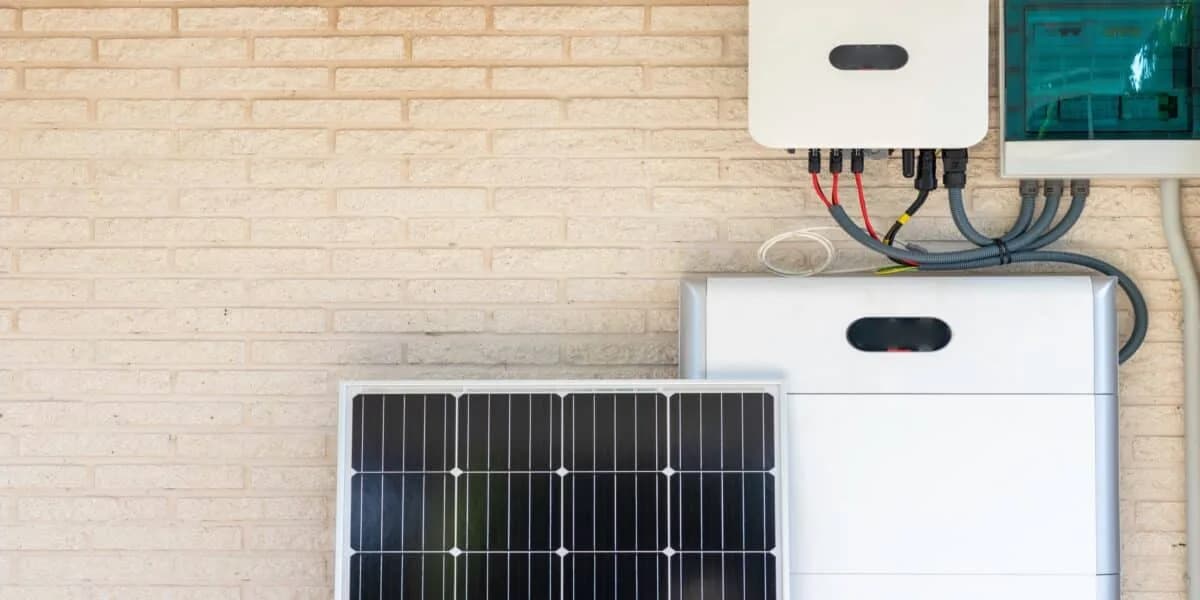
A home battery solves the problem elegantly. Instead of feeding your surplus back to the grid at an ever-decreasing rate, you store the electricity in your own battery and use it in the evening and at night.
Benefits of a home battery
- Protect your savings — Regardless of what happens with the net metering scheme
- More self-consumption — Use up to 80-90% of your own generated electricity
- Extra earnings — With a dynamic contract, charge cheap and use when expensive
- Backup power — Some systems continue working during a power outage
- Increased property value — An energy-neutral home is worth more
Which home battery suits you?
The choice depends on your situation. A brief overview:
| Type | Suitable for | Price from |
|---|---|---|
| Plug-and-play (Solarbank) | Balcony, garden, low consumption | All-in-one (SOLIX X1) |
| Whole household, expandable | High-voltage (Dyness, Pylontech) | Large system, hybrid inverter |
Not sure? Check our comparison page or read our buying guide.
Conclusion: prepare now
Don't wait until it's too late
- Maximum savings on your energy bill
- VAT reclaim of 21% on the purchase
- Protection against rising energy prices
- A shorter payback period (currently 4-6 years, soon even shorter)
The end of the net metering scheme on 1 January 2027 is certain. From that moment, feeding back electricity is barely worth anything. The sooner you install a home battery, the sooner you benefit from:
Request free, no-obligation advice. We'll help you make the right choice.
P
Patrick van Home Energy Solutions
Founder & certified energy advisor
Related Articles
Continue reading about home energy
Ready to order?
Browse our complete range of home batteries with the best value for money.